

Hey, it’s Elan. Welcome to my newsletter on what worked for SaaS startups that reached their first $1M in ARR. If this is your first time here, sign up and be the first to read future posts.
In this edition, I covered Tally Forms’ first million journey. I initially assumed their story would be similar to Jotform’s, but I was proved wrong.
Jotform was the first web-based form builder and targeted webmasters and developers. Tally, on the other hand, was a Notion-style form builder, and focused on indie makers, and no coders.
Both were bootstrapped and Tally did borrowed Jotform’s idea of signup-free product trials, but everything else - from product philosophy to marketing tactics - was miles apart.
Let’s deep dive into it.
About Tally.so
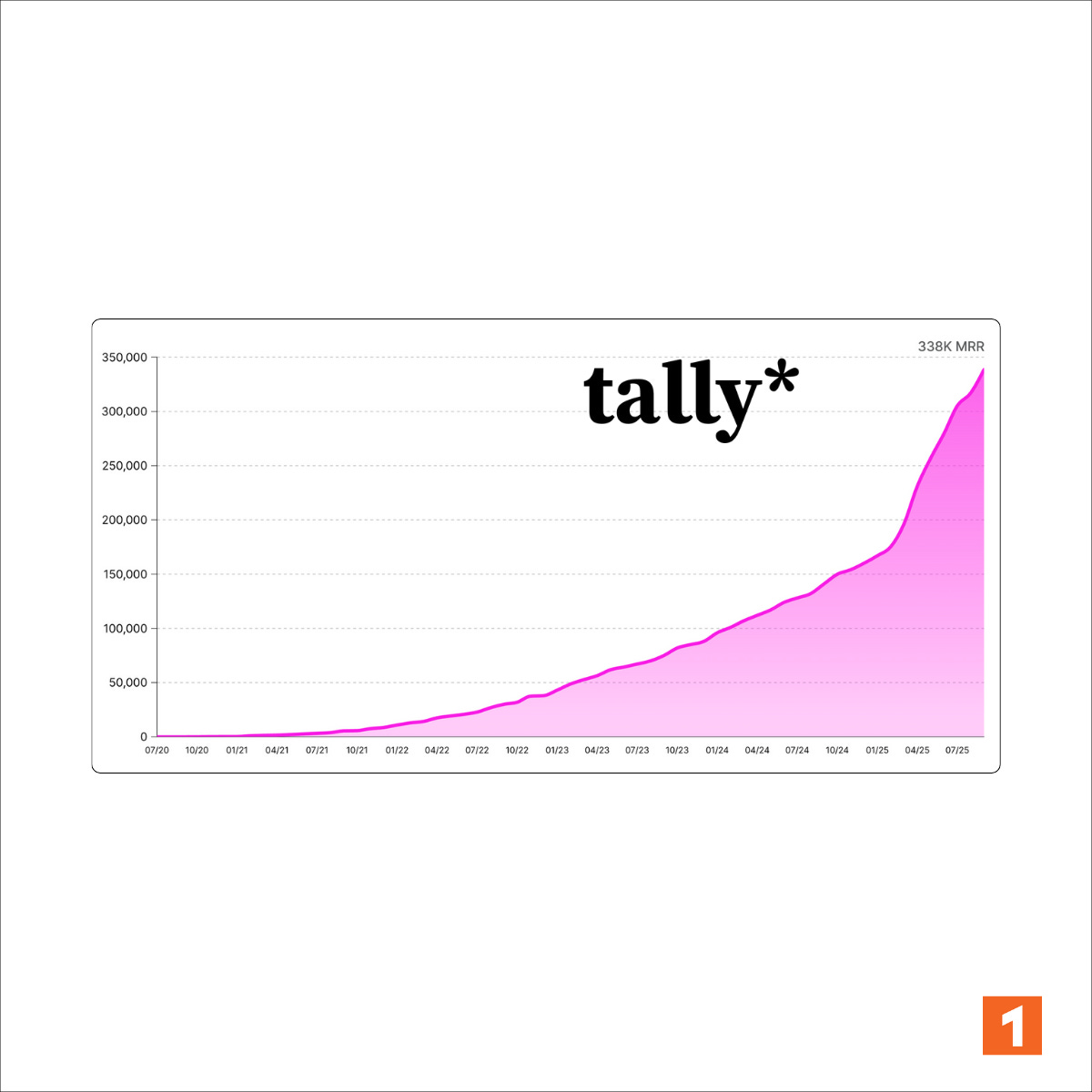
Tally is the simplest way to create beautiful forms & surveys, for free. Launched in September 2020, they’ve grown to:
16,000+ paying customers
800,000+ users
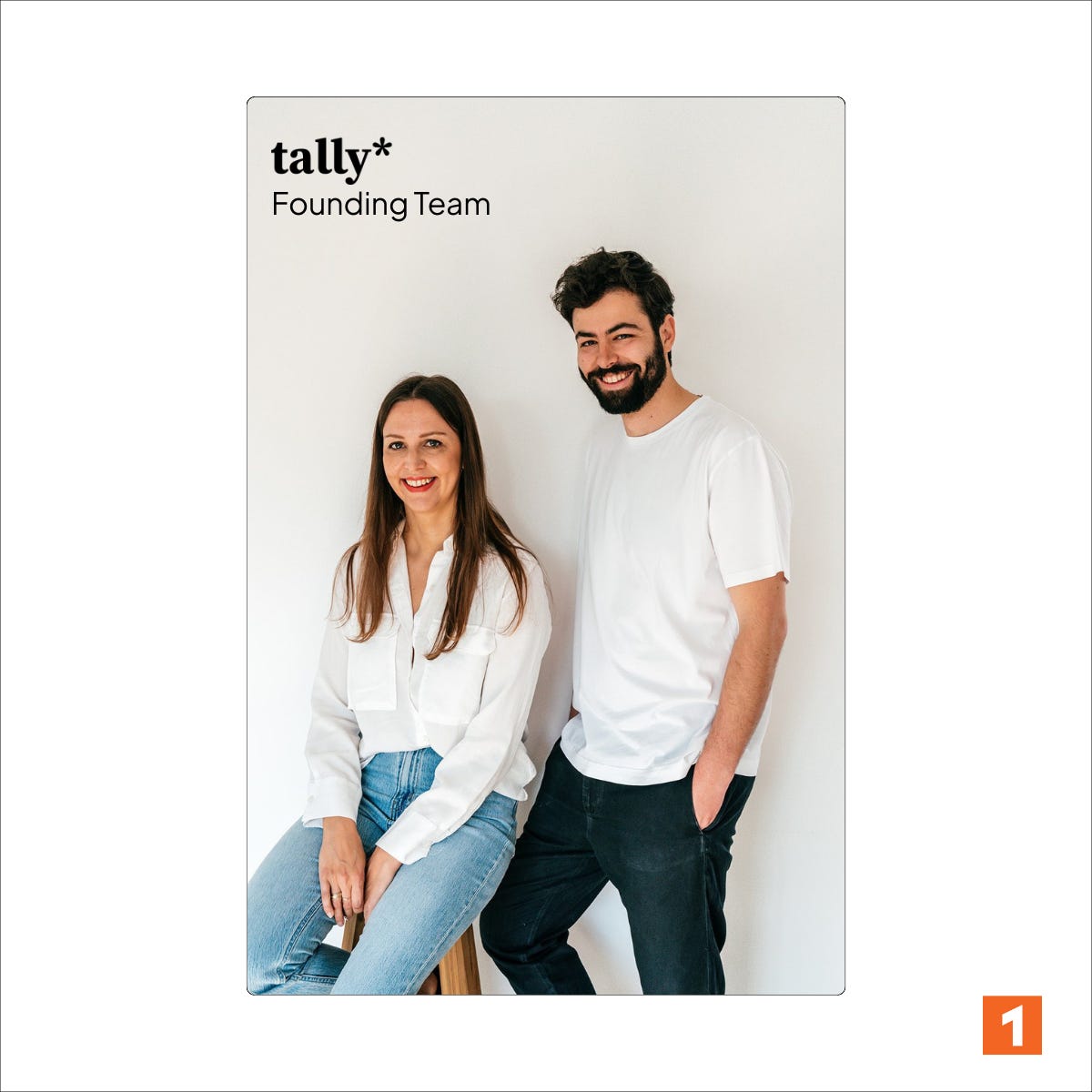
Tally’s Founding Team
Marie Martens and Filip Minev bootstrapped Tally as their second startup after shelving HotSpot (an influencer collaboration platform for hotels) due to COVID.
As frequent form users during their HotSpot days, they were unsatisfied with existing form builders, which were rigid and quickly hit a paywall. So they set out to build a form builder that was simple, powerful, and didn’t break the bank.
The Premise
Fully bootstrapped
Lean team of 5 until $1M
Zero marketing spend
Competitive market with Typeform, Jotform, and Google Forms
Gave away 99% of their features for free
Tally.so’s Marketing Strategy
Tally was built as a new kind of form builder for makers and no-coders.
This clearly defined target segment shaped their early growth efforts. They focused on being active in the forums, communities, and social platforms where indie makers, no-coders, and early stage startup founders spent their time.
How did they go about it?
Doing the unscalable
Product Hunt launch
Partner with no code communities
Riding on user generated content
Build in public updates
Unlimited free plan
In-product shareability
Doing the unscalable
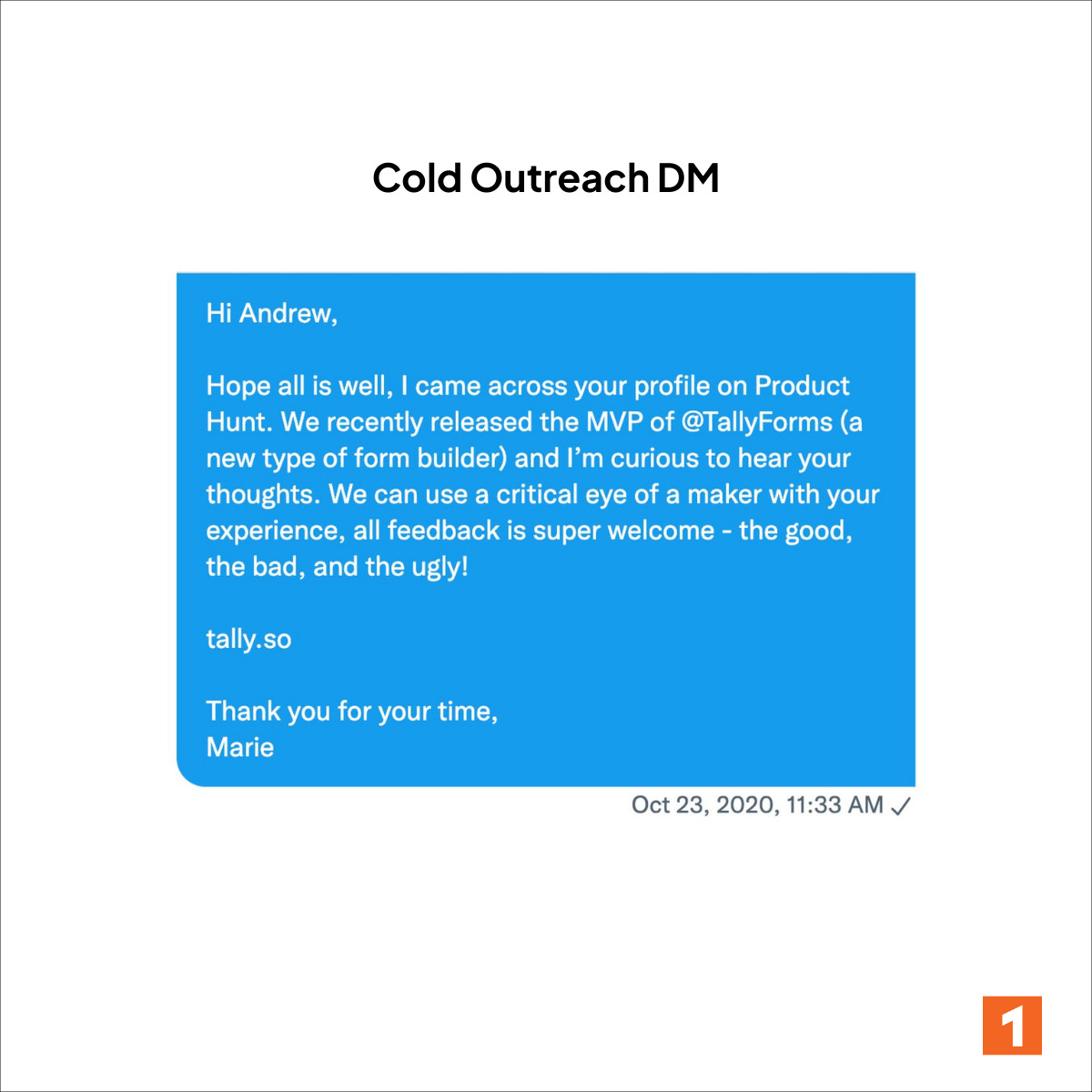
Even though Tally is a self-service product, they acquired their early users by doing the unscalable things: cold outreach, social selling, and community engagement.
Cold Outreach
Marie and Filip manually curated and reached out to a list of 1,000+ indie makers, creators, and founders who upvoted and engaged with similar products in Product Hunt and X.
We contacted hundreds of creators and founders. Most never replied, but the few who did became our first users and our loudest champions.
- Marie Martens, Co-Founder, Tally
No code communities
In addition to the cold outreach efforts, the team was very active in no code communities. It helped them get featured in podcasts, newsletters, and no code tool write-ups when they launched.


Social Selling
Once they launched the beta, Marie started pitching Tally to people who were looking for a form builder or unhappy with the existing ones.
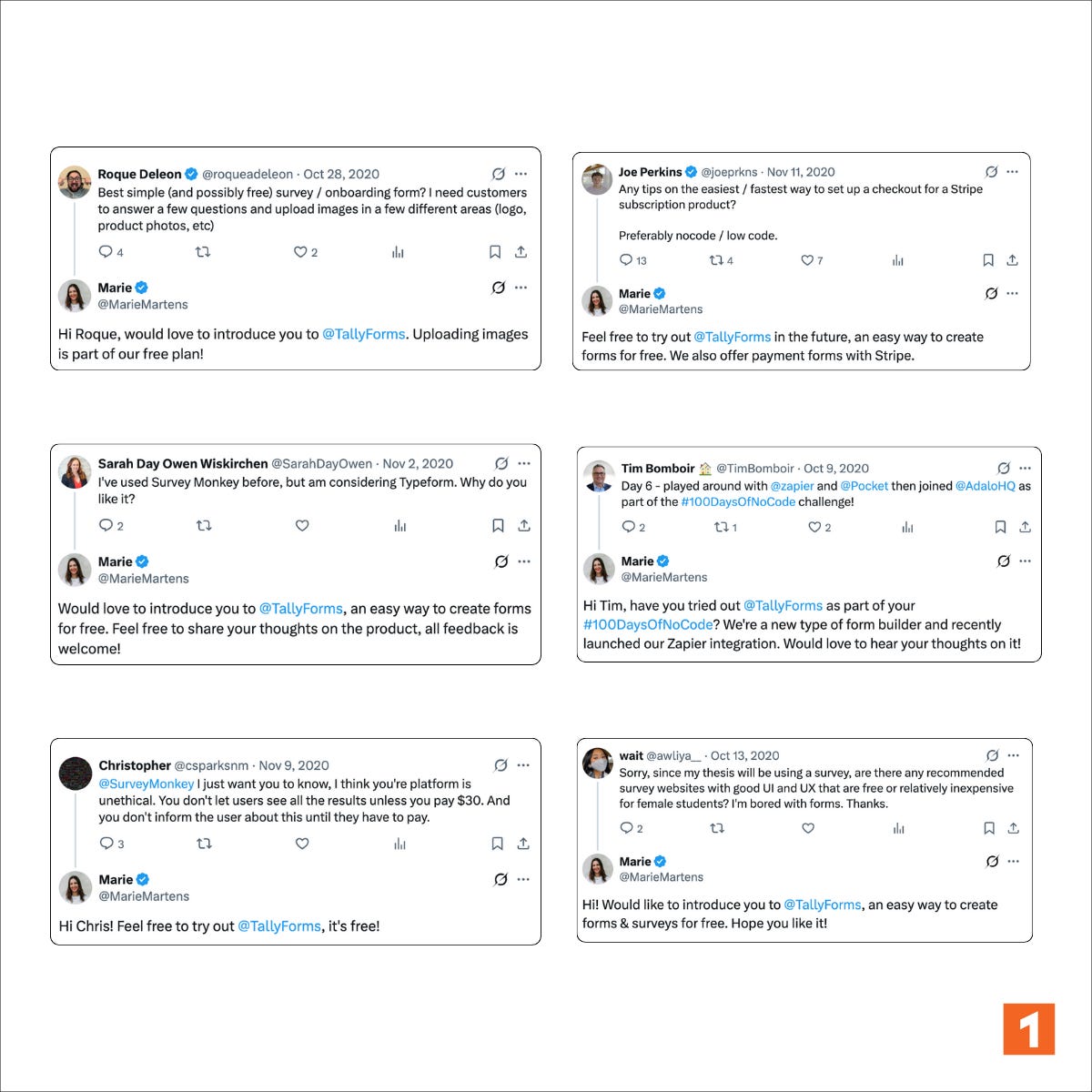
All these unscalable activities helped them onboard their first 300 users in two months. These early users helped Tally validate their idea and set the foundation for their product-led growth motion.
Made With Tally
Tally is inherently shareable because every form or survey created is shared with at least one other person.
For example, when a founder created a waitlist form using Tally, the natural next step was to add it to their website (exposing it to their visitors).
Tally leveraged this with one of the oldest PLG growth tactics by adding a ‘Made with Tally’ badge to these free forms. So when people saw and interacted with those forms, they were introduced to Tally.
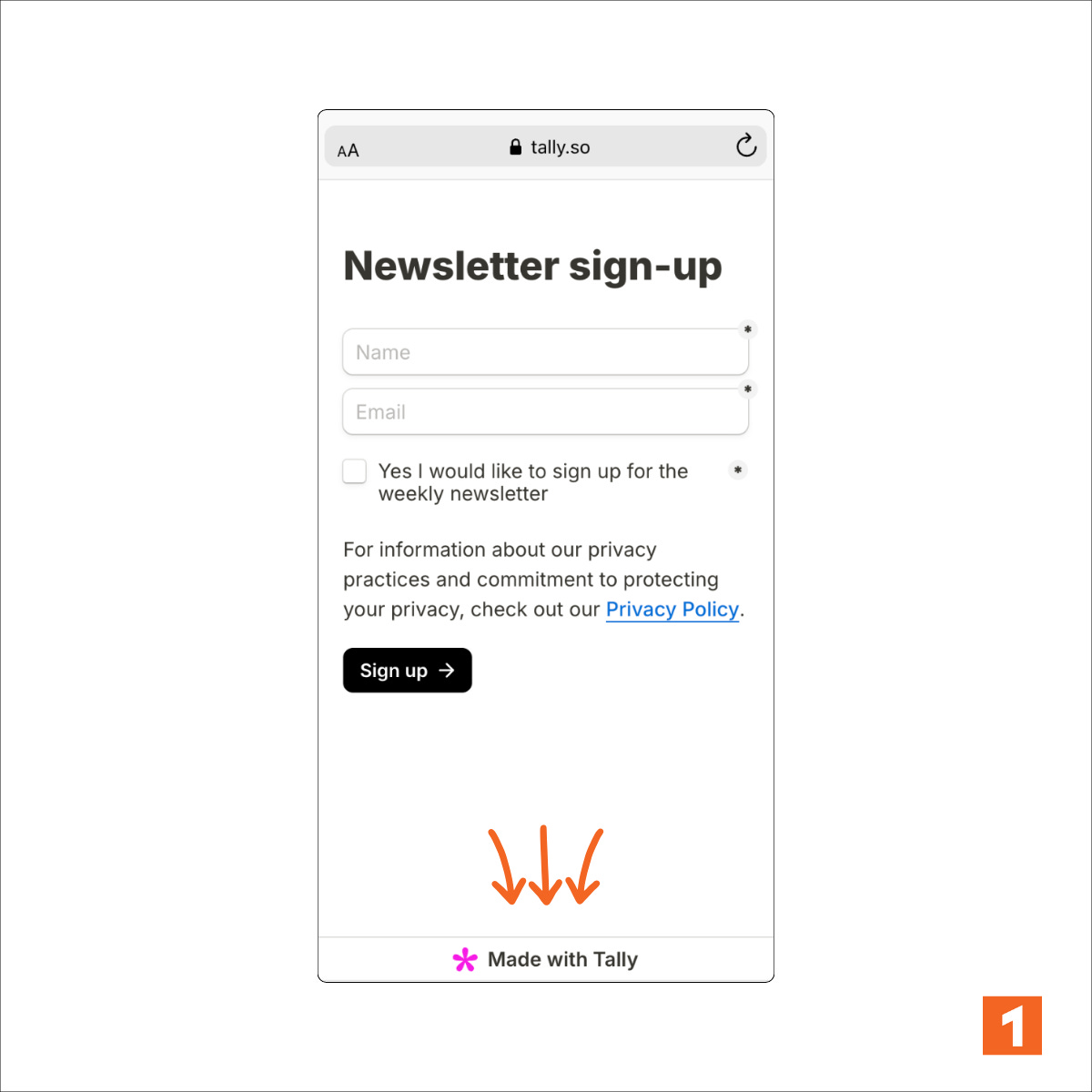
Each form became a distribution node, giving Tally second-order reach and creating a repeatable viral loop.
In the first three months, they had 300 users but more than 1,000+ respondents. Basically, one user was introducing Tally to three other people organically.
User Love
We’ve seen what a great product experience can do in the cases of ClickUp, Flodesk, Figma, and Notion. Users can’t stop talking about the product in their network.
Tally was able to pull off the same effect.
Users didn’t just adopt it, they became Tally’s brand ambassadors. Happy users were vocal about finally finding a cool, flexible form builder.


They also recommended Tally to peers who were looking for online form builders.


Product Hunt Launch
Six months later, in March 2021, Tally launched on Product Hunt.
The team didn’t treat it as a one-off checklist item. It was planned six months ahead, even before the cold outreach campaign. All along, they were building momentum for this specific moment.
They were intentional with their early user outreach and specifically targeted users who were active on Product Hunt. So by the time Tally’s team was ready to launch, they had a solid user base who could boost their chances of reaching the top spot.
Since they had a decent user base, they didn’t launch through an external hunter but did it from their own profile. Tally ended up ranking #5 of the day with 695 upvotes, after holding the #1 spot for 23 hours.
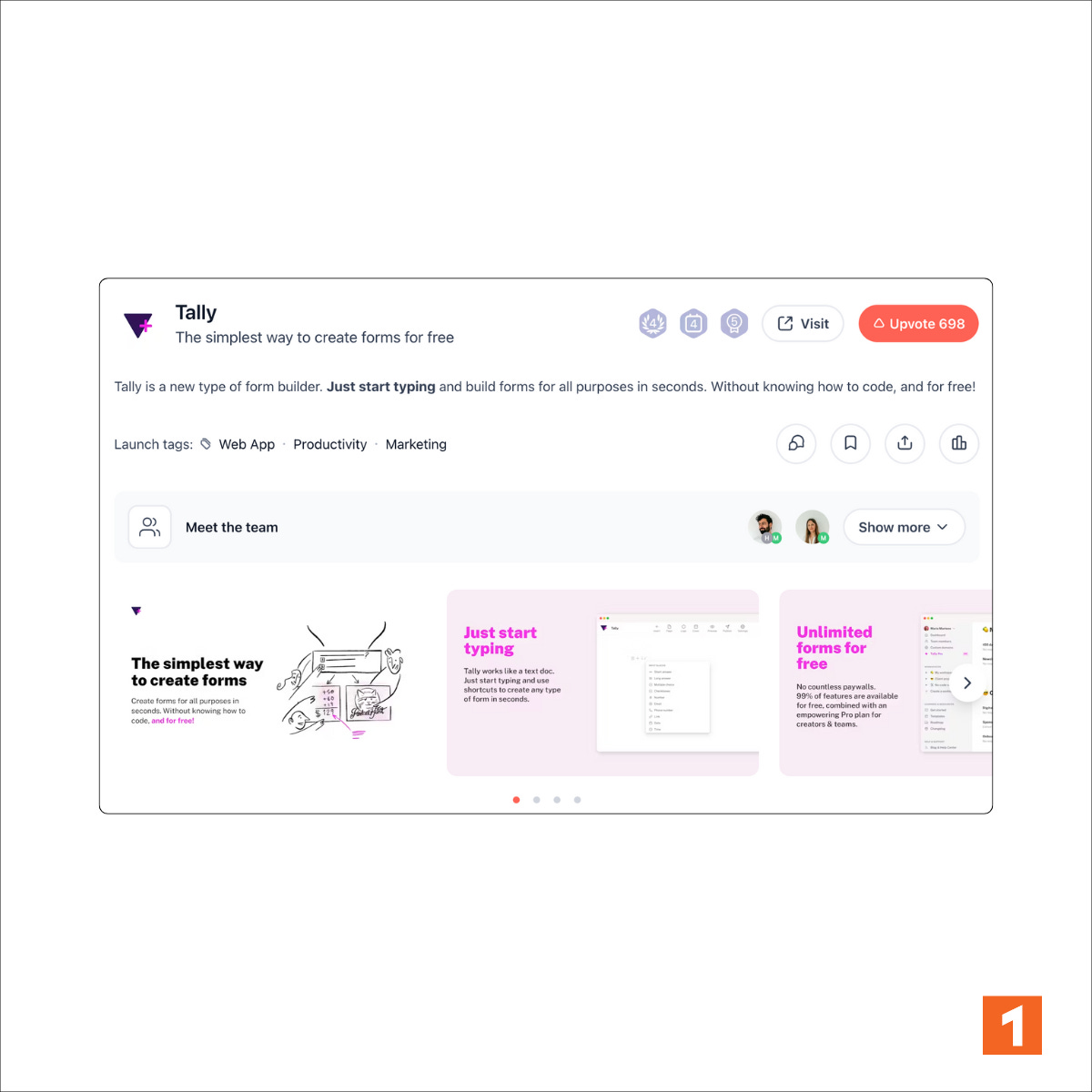
Even though they lost the top spot, it helped them double their user base from 1,500 to 3,000.
User generated Content
Tally hugely benefited from user generated content especially by indie makers and content creators.
Indie makers who built in public often showcased what they were building and shared their tech stack. Tally frequently appeared in those stacks as their waitlist or signup form builder of choice.


The other segment was content creators trying to build a following in the indie makers community. One of their primary content themes was sharing tool lists that help people build businesses faster and with little money.


Tally made those lists more often than not, since it was free and useful for indie makers.
This generated a lot of visibility, especially when the mention came from an established maker or creator with a large audience. At times, it almost looked like Tally had its own social media army.
#100DaysofNoCode
If indie makers and content creators helped Tally build visibility, their partnership with 100 School took it to the next level.
100 School is an online community for aspiring no-coders. They run bootcamps that help people learn no code tools and start building on their own.
The partnership got Tally included in their tool list, where participants learned how to use it and built simple use cases to showcase their progress.
Everyone in the bootcamp shared their daily updates on Twitter with the #100DaysOfNoCode hashtag.


The result was a constant wave of organic mentions that kept Tally in front of thousands of aspiring no coders throughout the year.
Build in Public
Marie and Filip took a build in public approach. Whether deliberate or accidental, it aligned perfectly with their growth strategy since indie makers were one of their key target segments.
As part of building in public, they consistently shared their wins, failures, and learnings through blogs and social media posts. It helped Tally build trust, credibility, and a loyal following in the maker community.


Building in public also earned them a lot of support and goodwill, as other indie makers wanted one of their own (an underdog) to succeed while competing with larger players in the market.
Freemium
Tally made 99% of its features free, which made it extremely referable. Users were happy to share it within their network simply because it was free and useful.
This also increased the effectiveness of their other growth loops like ‘Made with Tally’ and ‘100DaysOfNoCode,’ since it removed the cost barrier that usually comes with trying a new product.
In addition, Typeform unintentionally helped the cause by increasing its prices and limiting the free plan to only 10 responses. With unlimited free forms and responses, Tally became a compelling alternative and pushed more people to switch.


Growth Mix/Flywheel

Key Takeaway
Tally shows that you don’t need a novel idea or a big budget to stand out and succeed.
They managed to win while building a boring product in a competitive market. All they did was pick an underserved and priced-out segment and deliver a product that users loved.